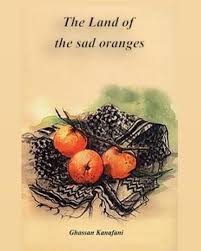
The Land of Sad Oranges
No Reviews Yet
Be the first to review this book
The Land of Sad Oranges is a collection of short stories that documents the Palestinian experience of displacement after 1948 through lived human detail rather than political narration. Ghassan Kanafani writes from inside exile and focuses on families forced to leave their homes, the collapse of social roles, and the long psychological effects of loss. The book presents exile as a continuous condition that reshapes memory, identity, and daily behavior. It does not offer heroic resistance or ideological slogans. Instead, it records silence, confusion, shame, and endurance. The stories examine fathers who lose authority, mothers who carry survival on their shoulders, and children who absorb trauma before understanding its meaning. The collection functions as testimony and social record, preserving the inner reality of displacement and exposing how historical catastrophe enters kitchens, shelters, and ordinary conversations.
Why You Should Read This Book
- Immerse yourself in a captivating story in the Palestinian Literature genre.
- Comprehensive coverage of the subject matter.
- Instant access on any device (Mobile, Tablet, Desktop).
Key Topics Covered
Category
Palestinian Literature
Pages
300
Year
1970
The Land of Sad Oranges is not a single narrative but a unified collection of short stories connected by one historical rupture. The Palestinian displacement of 1948 forms the background of every story, yet Kanafani avoids presenting it as a distant political event. He treats it as an ongoing human condition that shapes behavior, memory, and relationships long after the moment of flight. The book is built on the idea that catastrophe does not end when violence stops. It continues inside families and within the psychology of ordinary people.
The title story, The Land of Sad Oranges, serves as the emotional and structural core of the collection. It recounts the forced departure of a Palestinian family from their home during the 1948 war. The narrative voice belongs to a child who later recalls these events as an adult. This dual perspective allows Kanafani to show both the innocence of the moment and the deeper understanding that arrives later. The child experiences fear, confusion, and fragmentation. The adult narrator recognizes loss, humiliation, and irreversible change.
The family lives among orange groves, which represent livelihood, continuity, and belonging. These are not abstract symbols but the foundation of daily life. When the family is forced to flee, they attempt to take what they can, including crates of oranges. During the journey, the oranges rot and are abandoned. This moment captures the core tragedy of displacement. What once had value loses meaning once severed from its land. The loss is not only economic. It is existential.
The father initially tries to maintain control and dignity. He believes the departure will be temporary. He insists on order and restraint. As the journey continues, his authority weakens. He is not portrayed as cowardly or incompetent. He is overwhelmed by forces he cannot influence. Kanafani presents this loss of authority as one of the deepest wounds inflicted by exile, especially on men whose identity depended on providing stability.
The mother responds in a different way. She does not speak in political terms or offer promises. Her focus remains on the immediate survival of her children. Her suffering is quieter and more constant. Kanafani presents her endurance as practical rather than symbolic. She adapts faster, not because she suffers less, but because survival demands it.
Children play a central role throughout the collection. They observe adult behavior closely and internalize fear, instability, and silence. They do not understand borders or ideologies. They understand hunger, displacement, and the emotional collapse of their parents. Kanafani uses children to demonstrate how exile reproduces itself across generations.
After displacement, the family settles in temporary housing. Life becomes crowded and exposed. Privacy disappears. Time loses structure. Waiting replaces planning. The father becomes reactive rather than decisive. Aid replaces work. Dignity becomes fragile. Kanafani shows how dependency reshapes identity and social roles without resorting to moral judgment.
Other stories in the collection expand these themes through different voices and settings. In Letter from Gaza, the narrator writes to a friend who has left the country. The letter explains why departure is impossible, not because of borders but because leaving would mean abandoning shared suffering. The story emphasizes moral responsibility over personal safety. Remaining becomes an ethical choice rather than a political slogan.
In A Piece of the Past, Kanafani explores memory as an active burden. Characters are unable to separate the present from what they lost. The past does not inspire action or hope. It interrupts daily life and prevents emotional closure. Memory is not romanticized. It is shown as painful and persistent.
Several stories examine conversations among men who discuss politics and national causes. Their words rarely lead to action. Kanafani contrasts this verbal resistance with the silent labor of women and the unspoken trauma of children. He critiques empty rhetoric without dismissing the need for collective struggle. What he rejects is language that replaces responsibility.
A recurring theme throughout the collection is dignity. Refugees attempt to preserve self-respect while relying on aid and charity. This tension defines much of their daily behavior. Kanafani portrays this struggle without sentimentality. Shame exists alongside gratitude. Pride exists alongside dependency.
Another central theme is the distortion of time. Exile suspends the future. Plans are postponed indefinitely. Characters live in a continuous present shaped by waiting. This temporal stagnation becomes one of the most damaging effects of displacement.
Kanafani’s prose style remains restrained and precise. He avoids exaggeration and emotional manipulation. Scenes are built through concrete details such as roads, trucks, shelters, food, and silence. Emotion emerges from circumstance rather than commentary. This restraint reinforces the credibility of the narrative.
The book also carries an implicit critique of political leadership and unfulfilled promises. Slogans circulate while conditions remain unchanged. Refugees learn to distrust grand declarations and focus on survival. Kanafani presents this realization as a painful form of maturity.
The Land of Sad Oranges does not offer resolution or closure. It does not end with victory or despair. It ends with continuation. Life persists under altered conditions. Loss becomes permanent, but existence continues.
The power of the book lies in its refusal to simplify. It does not demand sympathy or deliver instructions. It records reality as experienced by those who lived it. This is why the work remains relevant. It speaks to displacement as a human condition rather than a historical exception.
By the end of the collection, the reader does not carry a lesson. The reader carries weight. The weight of interrupted lives, fractured identities, and a homeland transformed into memory without release.
Community Reviews0
Please login to add a review.
Add Your Review
No reviews yet. Be the first to share your thoughts!